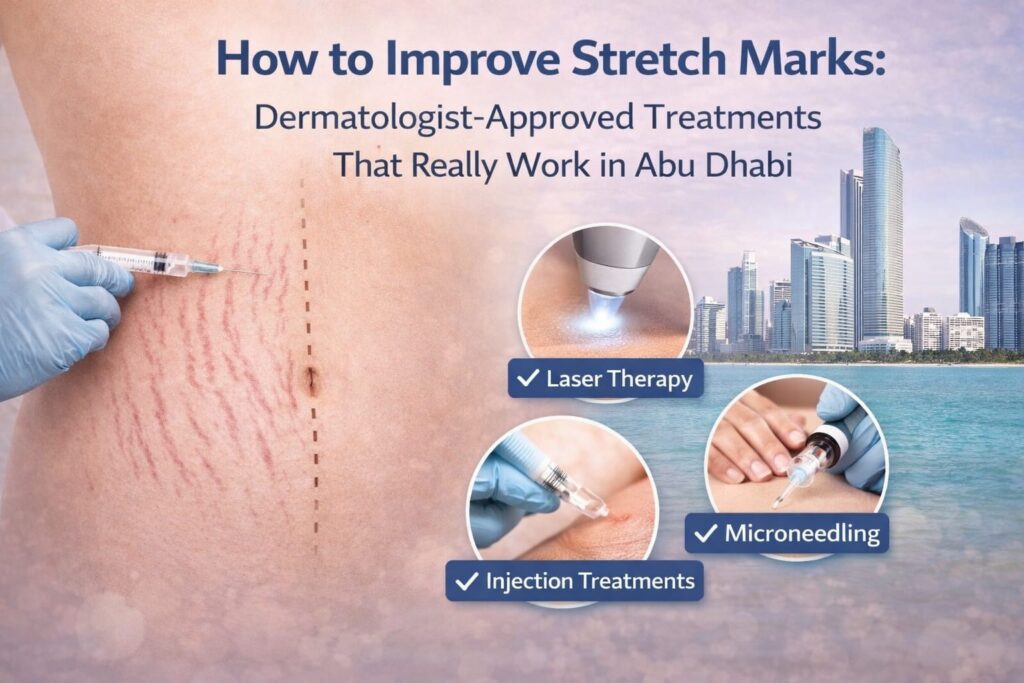
Stretch marks are extremely common. Yet, they are also one of the most misunderstood skin concerns. Many people waste time and money on creams that promise miracles but deliver little change.
This evidence-based guide explains what truly works for stretch marks, what does not, and how board-certified dermatologists treat them in real clinical practice in Abu Dhabi.
What Are Stretch Marks? (Striae Distensae)
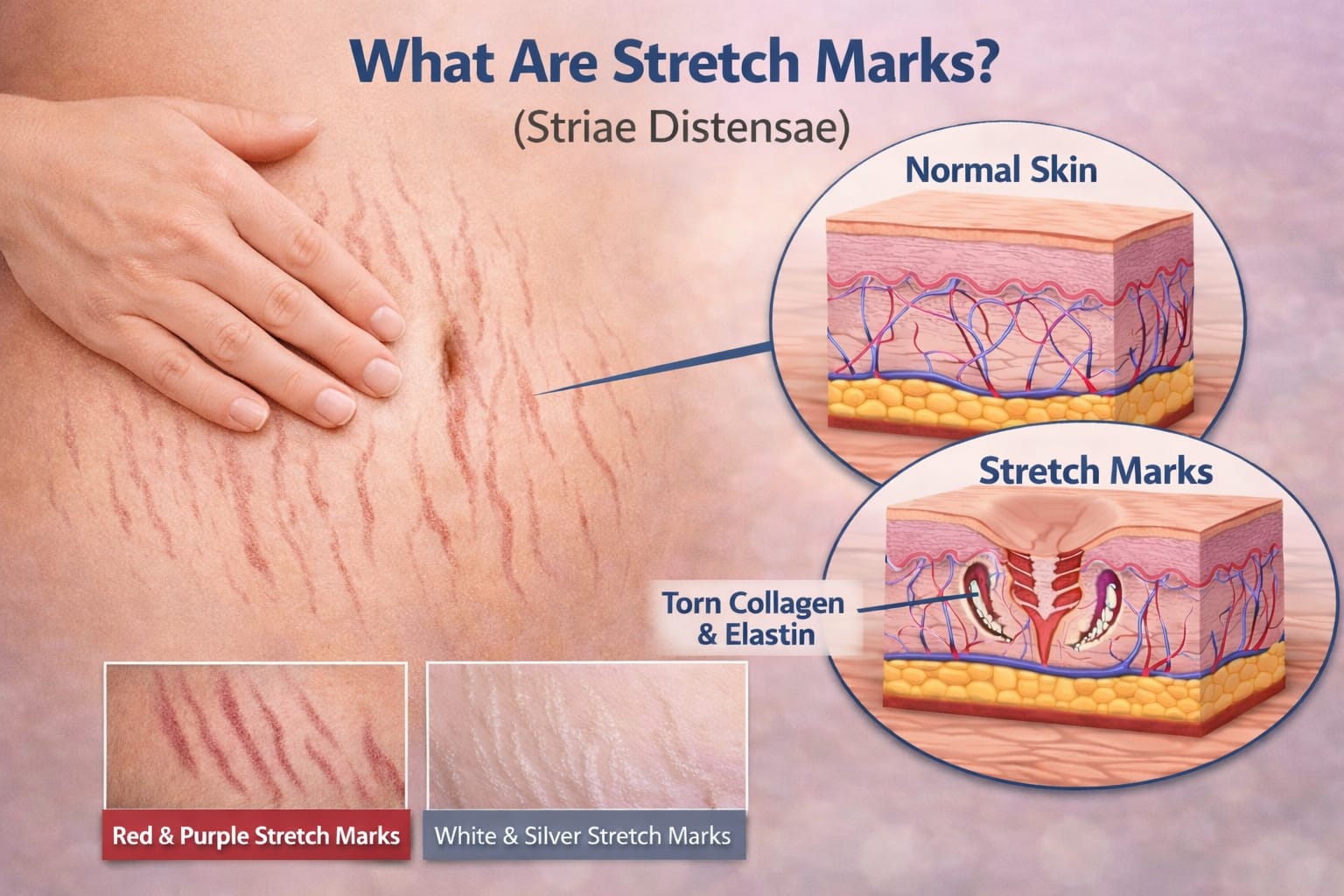
Stretch marks, medically called striae distensae, occur when the skin stretches faster than it can adapt. As a result, the collagen and elastin fibers in the dermis tear.
Over time, these tears become visible lines on the skin.
Common Causes of Stretch Marks
- Pregnancy
- Rapid weight gain or weight loss
- Puberty-related growth spurts
- Bodybuilding or muscle gain
- Hormonal changes (especially cortisol)
- Genetic predisposition
Because the damage happens deep within the skin, surface-level products alone cannot fully remove stretch marks.
Types of Stretch Marks (Why Timing Matters)
Understanding the stage of stretch marks is essential for choosing the right treatment.
Red or Purple Stretch Marks (Striae Rubrae)
- New and inflamed
- Contain active blood vessels
- Respond best to medical treatments
White or Silver Stretch Marks (Striae Albae)
- Older and mature
- Less blood supply
- Harder to treat but still improvable
Early treatment always delivers better results.
Can Stretch Marks Be Completely Removed?
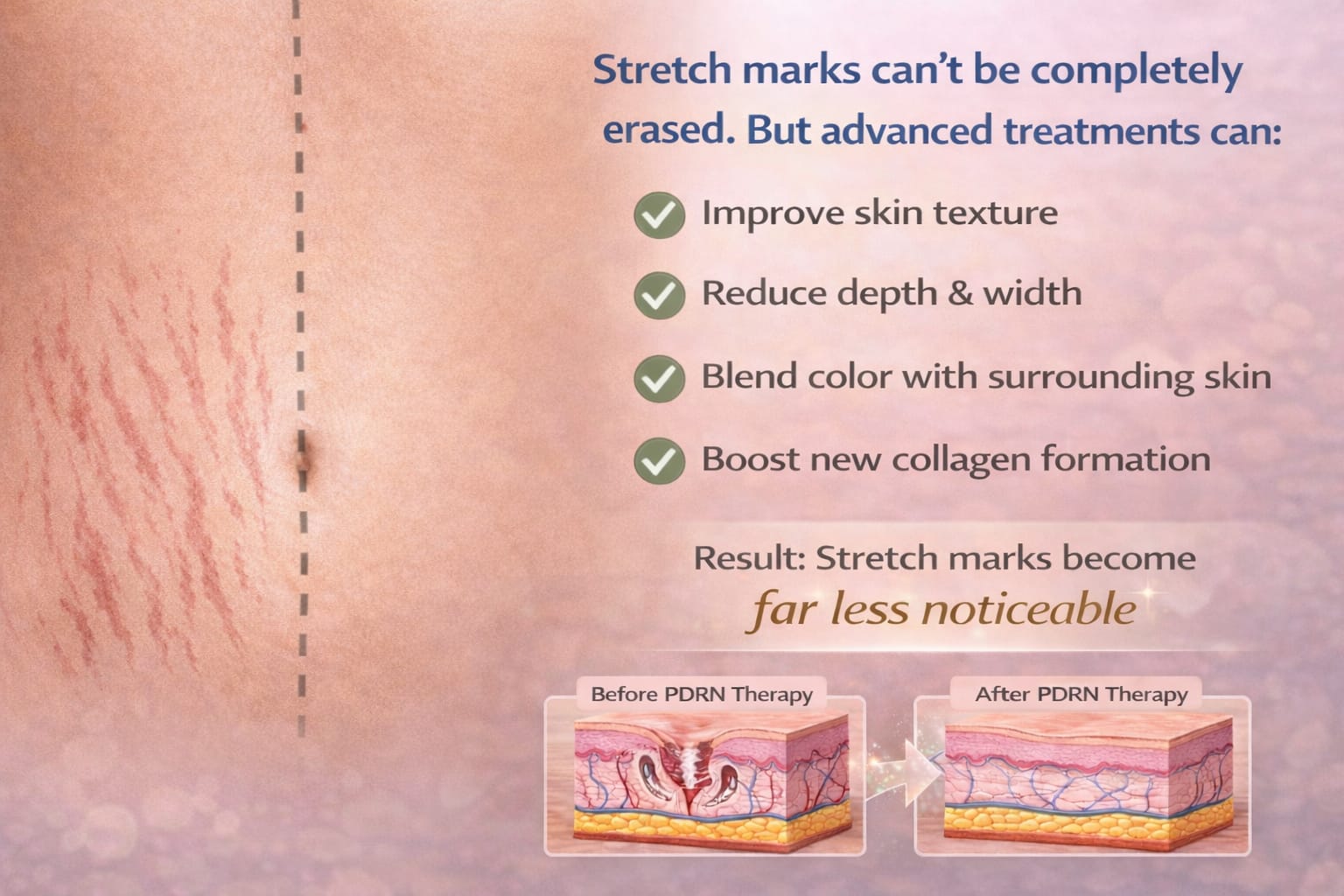
From a dermatological standpoint, stretch marks cannot be erased completely. However, modern treatments can:
- Improve texture
- Reduce depth and width
- Blend color with surrounding skin
- Stimulate new collagen formation
With the right approach, stretch marks can become significantly less noticeable.
Dermatologist-Approved Treatments That Really Work in Abu Dhabi
1. Microneedling (Collagen Induction Therapy)
Microneedling creates controlled micro-injuries in the skin. This process stimulates natural collagen and elastin production.
Why dermatologists recommend it:
- Improves skin texture
- Reduces stretch mark depth
- Safe for most skin tones
Often combined with growth factors or PRP for enhanced results.
2. Fractional Laser Treatments
Laser therapy targets the deeper layers of skin where stretch marks originate.
Clinically proven benefits:
- Stimulates collagen remodeling
- Improves skin firmness
- Reduces color contrast
Fractional lasers are especially effective for white stretch marks when done in multiple sessions.
3. Radiofrequency (RF) Skin Tightening
RF energy heats the dermis without damaging the surface.
Why it works:
- Boosts collagen production
- Improves skin elasticity
- Enhances results when combined with microneedling
This combination therapy is increasingly used in advanced dermatology clinics.
4. PRP (Platelet-Rich Plasma) Therapy
PRP uses the patient’s own blood-derived growth factors to repair damaged skin.
Dermatologist benefits:
- Accelerates healing
- Enhances collagen synthesis
- Improves overall skin quality
PRP is not a standalone cure but works best as an adjunct treatment.
5. Medical-Grade Topical Treatments
Prescription-strength retinoids and dermatologist-formulated creams can help, especially in early stages.
What they can do:
- Improve skin texture
- Support collagen renewal
- Enhance results of in-clinic treatments
Retinoids should not be used during pregnancy.
Advanced Regenerative Treatment: Polydeoxyribonucleotide (PDRN) Therapy for Stretch Marks
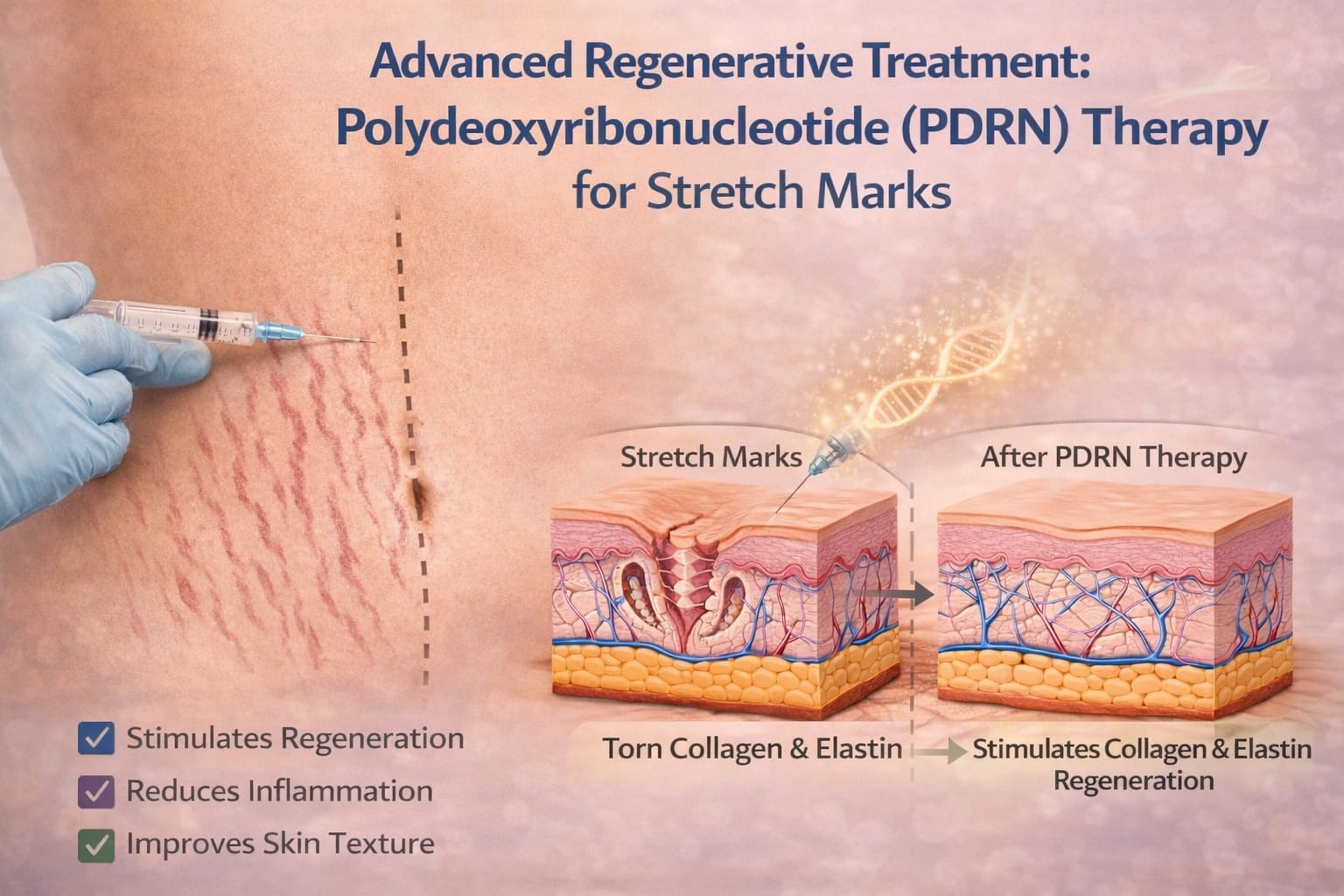
Polydeoxyribonucleotide (PDRN) is an advanced regenerative treatment increasingly used by dermatologists to improve stretch marks by supporting true dermal repair rather than surface-level correction.
Stretch marks are a form of dermal scarring caused by disruption of collagen and elastin fibers. PDRN works at a cellular level by activating adenosine A2A receptors, which play a key role in skin healing and regeneration.
How PDRN Improves Stretch Marks
Dermatologist-guided PDRN therapy helps by:
- Stimulating fibroblast activity for new collagen production
- Enhancing collagen and elastin synthesis
- Improving microcirculation within damaged dermal tissue
- Reducing chronic inflammation associated with scar formation
- Supporting organized tissue remodeling
As a result, treated skin shows improved thickness, elasticity, and texture, leading to visible softening of stretch marks and better blending with surrounding skin.
How PDRN Is Used in Clinical Practice
In advanced dermatology clinics in Abu Dhabi, PDRN is commonly:
- Delivered through precise intradermal injections
- Combined with microneedling for enhanced penetration
- Used alongside energy-based devices such as radiofrequency or laser treatments
This combination approach significantly enhances treatment outcomes while supporting long-term dermal regeneration.
Treatments That Do NOT Work (Be Cautious)
Many products are heavily marketed but lack scientific backing.
- Over-the-counter miracle creams
- Home remedies (lemon, sugar scrubs, oils)
- DIY dermarollers without supervision
These may moisturize the skin but do not repair dermal damage.
How Many Sessions Are Needed?
Results depend on:
- Age of stretch marks
- Skin type
- Treatment method
- Individual healing response
Most patients require 3–6 sessions, spaced several weeks apart, for visible improvement.
Who Should Perform Stretch Mark Treatments?
For safety and results in Abu Dhabi, stretch mark treatments should always be performed by:
- Board-certified dermatologists
- Trained aesthetic physicians
- Licensed medical professionals in clinical settings
This ensures correct device settings, skin assessment, and complication management.
Dr. Mouza Al Suwaidi’s Expert Advice
According to Dr. Mouza Al Suwaidi, Consultant Dermatologist at Emirates Dermatology & Cosmetology Center (EDCC), Abu Dhabi, stretch mark treatment is not about quick fixes. It is about medical-grade collagen stimulation, realistic expectations, and personalized care.
Early intervention delivers the best outcomes. However, even long-standing stretch marks can improve significantly with the right treatment plan.
If stretch marks are affecting your confidence, consult Dr. Mouza Al Suwaidi at Emirates Dermatology & Cosmetology Center (EDCC), Abu Dhabi, for a personalized, evidence-based treatment plan.
Frequently Asked Questions (FAQs)
Are stretch mark treatments safe for all skin tones?
Yes, when performed by experienced professionals using appropriate devices.
Is laser better than microneedling?
Both work differently. Many dermatologists combine them for optimal results.
Can stretch marks return?
Treated stretch marks usually do not return, but new ones can form if skin stretching continues.
When are results visible after PDRN treatment?
Initial improvements in skin texture may be seen within a few weeks, with progressive improvement as collagen remodeling continues over several months.
This content is medically reviewed by Dr. Mouza Al Suwaidi, Consultant Dermatologist at Emirates Dermatology & Cosmetology Center (EDCC), Abu Dhabi, and written using dermatology.