
Introduction
Humidity is more than just an environmental discomfort—it has a direct impact on skin health. In regions like the UAE, where heat and moisture levels are consistently high, the skin is more prone to infections, breakouts, and inflammatory conditions. Excess sweat, clogged pores, and microbial growth create an environment where multiple skin concerns can develop or worsen.
This guide explains how humidity affects the skin, common skin conditions associated with it, and how to choose the right sunscreen and treatments for protection.
How Humidity Affects Your Skin
High humidity increases sweat production, which can mix with oil, dirt, and bacteria on the skin. This leads to:
- Blocked pores
- Increased bacterial and fungal growth
- Skin irritation and inflammation
As a result, individuals may experience frequent breakouts, rashes, and infections, especially in hot and humid climates.
Common Skin Conditions in Humid Weather
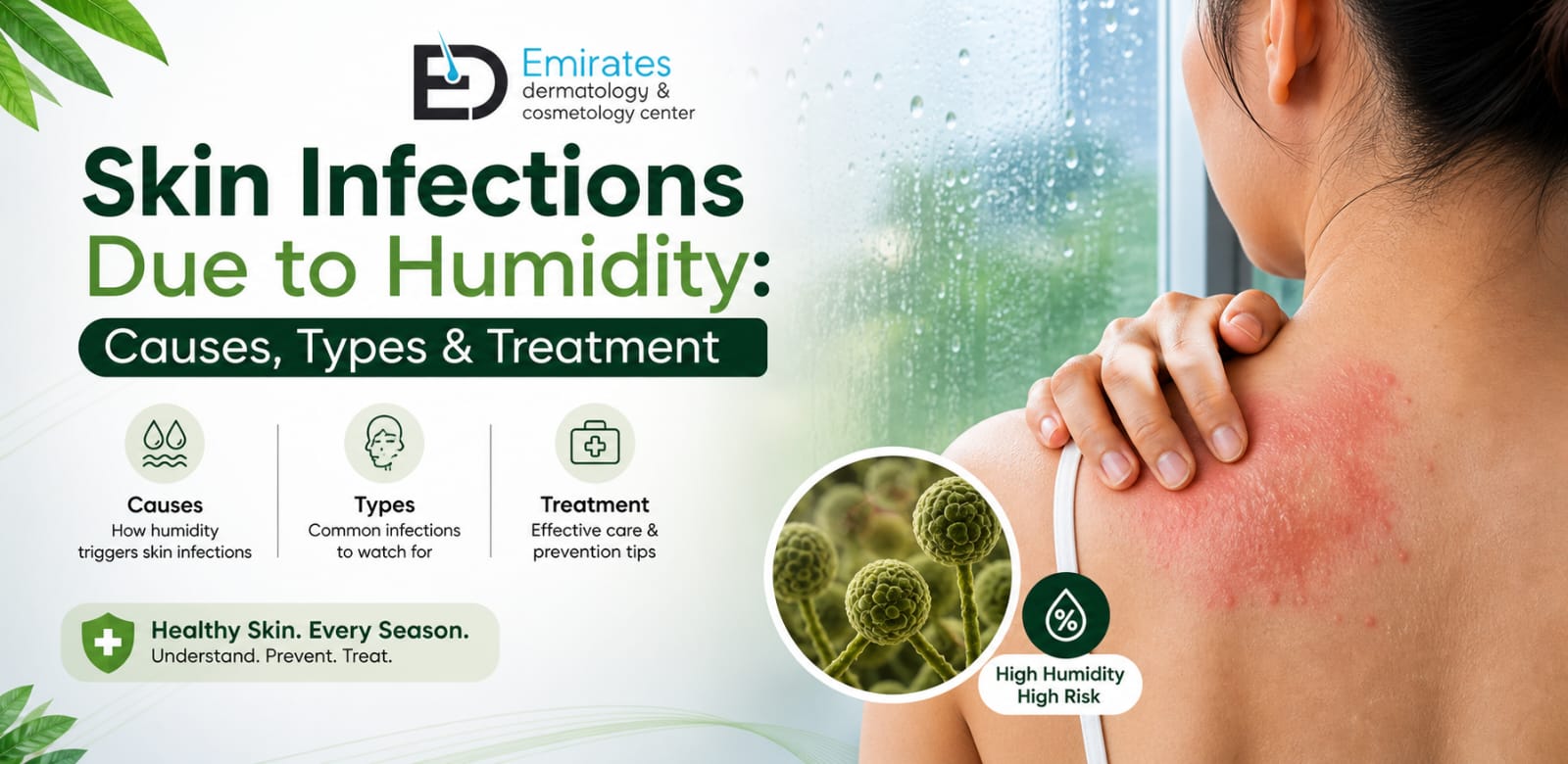
Skin Infections Due to Humidity: Causes, Types & Treatment
1. Fungal Infections
Fungal infections develop in warm, moist areas of the body. They are commonly seen in skin folds and areas prone to sweating.
Symptoms:
- Itching and redness
- Ring-shaped rashes
- Scaling or peeling skin
Treatment:
- Topical or oral antifungal medications
- Keeping the skin clean and dry
- Wearing breathable clothing
2. Bacterial Infections
Bacterial infections occur when bacteria enter through cuts or weakened skin barriers.
Symptoms:
- Redness and swelling
- Pain and warmth
- Pus-filled lesions
Treatment:
- Topical or oral antibiotics
- Proper wound care
- Maintaining hygiene
3. Acne & Seborrheic Dermatitis
Humidity increases oil production, which leads to clogged pores and inflammation.
Symptoms:
- Whiteheads and blackheads
- Pimples and cystic acne
- Red, flaky, or greasy patches
Treatment Options:
- Medicated cleansers and topical treatments
- Chemical peels
- Microneedling for acne scars
- Laser-based therapies
Consistent skincare and professional evaluation help manage these conditions effectively.
4. Heat Rash (Prickly Heat)
Heat rash occurs when sweat ducts become blocked, trapping sweat beneath the skin.
Symptoms:
- Small red bumps
- Itching or prickling sensation
Treatment:
- Cooling the skin
- Wearing loose, breathable clothing
- Using soothing lotions like calamine
5. Intertrigo
Intertrigo is caused by friction and moisture in skin folds.
Symptoms:
- Redness and irritation
- Burning sensation
- Unpleasant odor
Treatment:
- Antifungal or antibacterial creams
- Reducing moisture and friction
- Maintaining proper hygiene
6. Eczema Flare-Ups
Humidity can trigger or worsen eczema in some individuals.
Symptoms:
- Dry, cracked skin
- Intense itching
- Inflamed patches
Treatment:
- Regular moisturization
- Avoiding triggers
- Medicated creams or prescription therapies
- Advanced treatments like phototherapy in severe cases
Why Sunscreen is Essential in Humid Weather
In humid climates, sunscreen is not optional—it is essential. The combination of UV exposure and moisture can damage the skin barrier, leading to pigmentation, premature aging, and increased sensitivity.
An ideal sunscreen for humid conditions should be:
- Lightweight
- Non-greasy
- Sweat-resistant
- Non-comedogenic
Best Sunscreen Options for Humid Climates
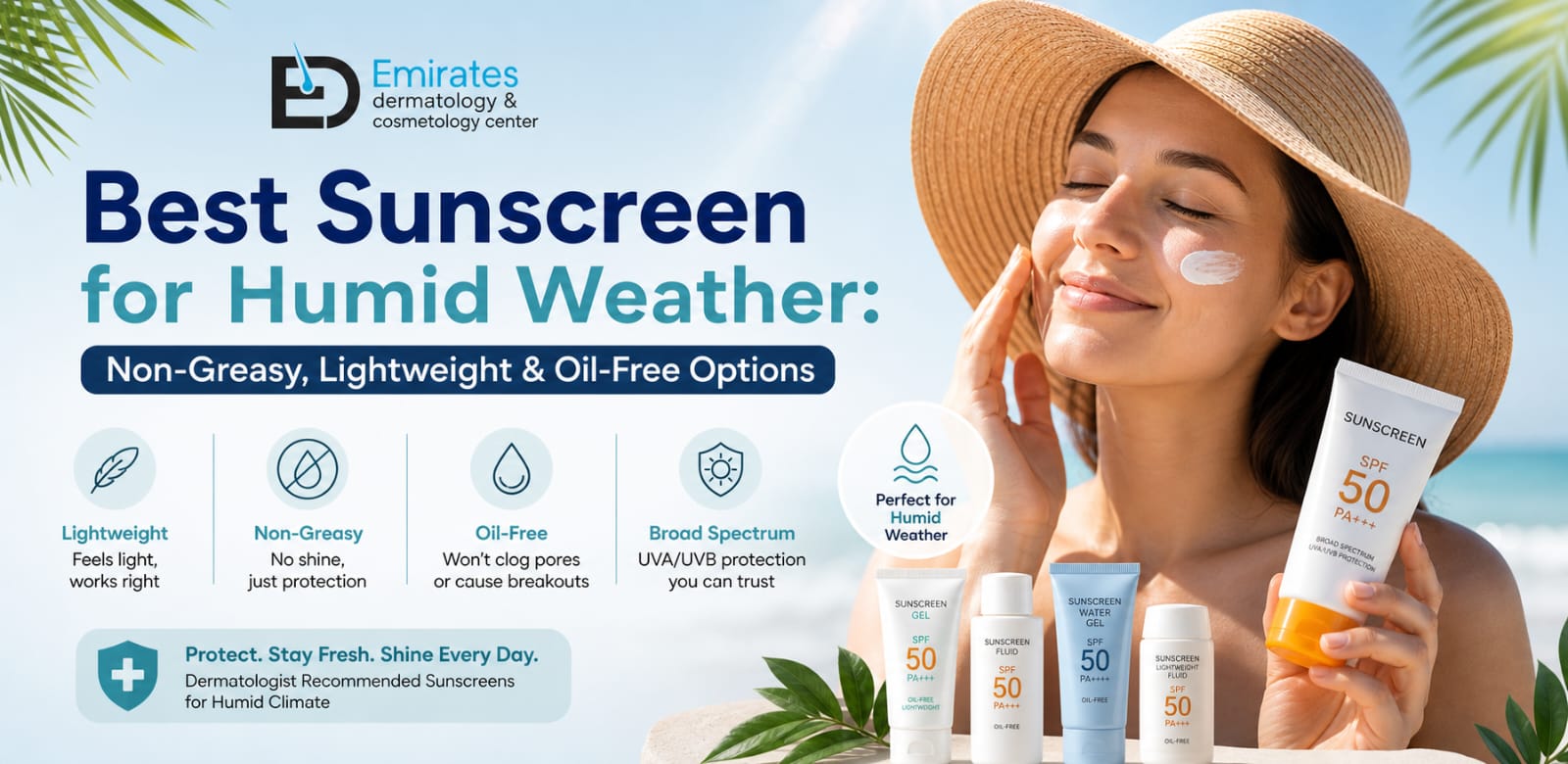
Non-Greasy Sunscreen
Prevents clogged pores and keeps the skin feeling fresh throughout the day.
Sunscreen for Humidity
Designed to withstand sweat and high temperatures while maintaining effectiveness.
Matte Finish SPF
Controls excess oil and provides a shine-free appearance, ideal for oily skin.
Lightweight Sunscreen
Absorbs quickly without leaving a sticky or heavy residue.
Oil-Free Sunscreen
Perfect for acne-prone and sensitive skin types, preventing breakouts.
Mineral Sunscreen
Mineral sunscreens (containing zinc oxide or titanium dioxide) are suitable for sensitive and acne-prone skin. They sit on the surface of the skin and provide broad-spectrum UV protection, making them a reliable option for humid climates.
Best Sunscreen for UAE Weather
Should offer broad-spectrum protection, be water-resistant, and remain comfortable during prolonged exposure to heat.
The best sunscreen for UAE weather should offer broad-spectrum protection against both UVA and UVB rays while remaining lightweight and comfortable in high heat and humidity. It should ideally be water-resistant and sweat-resistant to maintain effectiveness during prolonged outdoor exposure. A non-comedogenic and oil-free formula is recommended to prevent clogged pores and breakouts, especially for oily or acne-prone skin. Fast-absorbing textures such as gel-based or fluid sunscreens work well in humid conditions, ensuring the skin feels breathable and non-sticky throughout the day. Regular reapplication is essential to maintain consistent protection in extreme climates.
Advanced Sunscreen Formulations to Consider
- Gel-based sunscreens
- Ultra-fluid lotions
- Serum sunscreens
- Essence-based formulas
- Sweat-resistant and water-resistant sunscreens
- Non-comedogenic formulations
These options are specifically designed for high humidity and hot climates.
How to Choose the Right Sunscreen in Humidity
Choose based on your skin type:
- Oily skin: Matte finish, oil-free sunscreen
- Sweaty skin: Sweat-resistant formulas
- Acne-prone skin: Non-comedogenic sunscreen
Key Features to Look For:
- Breathable texture
- Non-sticky finish
- Shine control
Tips to Prevent Sunscreen from Sliding into Eyes
- Use lightweight, fast-absorbing formulas
- Allow sunscreen to absorb for 10–15 minutes before stepping out
- Avoid over-application
- Prefer matte or gel-based sunscreens
These steps are especially helpful on sweaty days.
Dermatology Treatments for Humidity-Related Skin Issues
At EDCC – Emirates Dermatology & Cosmetology Center in Abu Dhabi, treatments are provided by a team of qualified dermatology professionals. The clinic is founded by Dr. Mouza Al Suwaidi, who oversees the center’s vision and standards of care.
Options include:
- Medical-grade facials for humidity-related concerns
- Dermatologist consultations
- Skin barrier repair treatments
- Non-surgical skin treatments
For conditions like acne scars, chronic infections, or severe eczema, advanced dermatological procedures may be recommended by qualified specialists.
Note: Treatments are performed by licensed dermatology professionals. Clinic ownership does not imply that all procedures are performed by a single doctor.
When to Seek Professional Help
Consult a dermatologist if you experience:
- Recurring skin infections
- Severe acne or acne scars
- Persistent rashes or irritation
- Chronic skin conditions
Early diagnosis and treatment can prevent complications and improve outcomes.
Conclusion
Humidity plays a major role in triggering various skin conditions, from fungal and bacterial infections to acne and eczema flare-ups. Understanding how your skin reacts to humid environments allows you to take preventive measures and choose the right skincare products.
With proper hygiene, targeted treatments, and the right sunscreen, it is possible to maintain healthy, balanced skin—even in extreme climates.