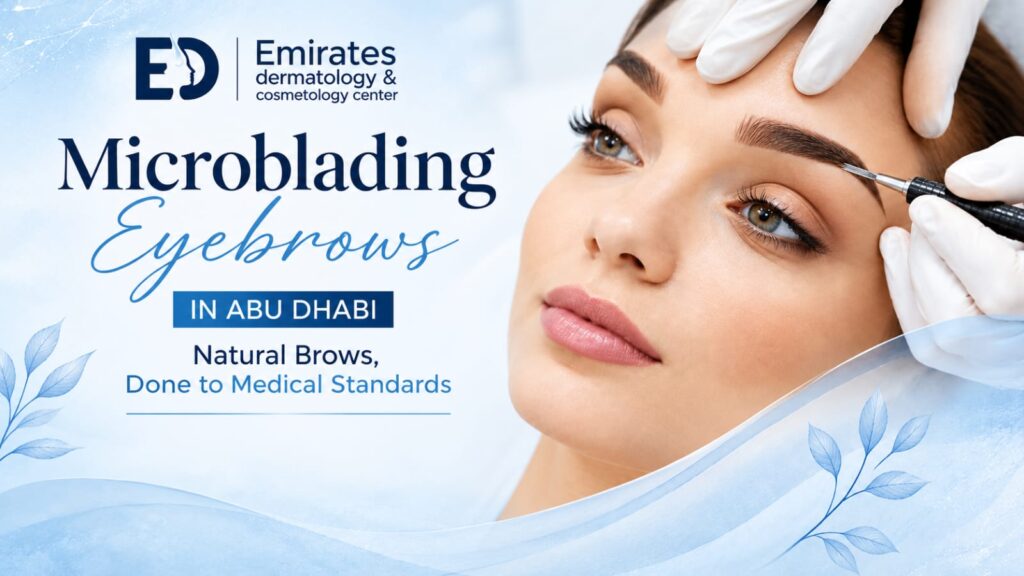
Microblading eyebrows is a semi-permanent cosmetic tattooing technique that creates fine, hair-like strokes to fill in sparse, uneven, or over-plucked eyebrows. Unlike machine-based brow tattooing, true microblading uses a manual hand tool to deposit pigment in individual, feather-fine strokes — the technique responsible for the natural, “real hair” look the treatment is known for when done well.
At EDCC, microblading is performed by Dr. Mouza Al Suwaidi, not a salon technician — treated as the medical-grade cosmetic procedure it is, with the same safety standards applied to every other treatment at the clinic.
Why It Matters Who Performs It
Microblading is a form of cosmetic tattooing, and it comes with the same real considerations any skin-penetrating procedure does: infection control, pigment selection, and proper technique to avoid complications like pigment migration or uneven healing. Many microblading services are offered in beauty salons by technicians without medical training — which is worth knowing, since it changes what safety standards and complication management actually look like if something doesn’t go as expected.
How It Works
- Consultation & brow mapping — your natural brow shape, face structure, and hair growth pattern are assessed to design a shape that suits you, marked out before any pigment is applied.
- Numbing — topical anaesthetic is applied to minimize discomfort.
- Pigment application — using a manual hand tool, fine, hair-like strokes are drawn into the upper layers of skin, matched to your natural or desired brow color.
- Healing — brows will appear noticeably darker and more defined immediately after, then lighten as they heal over the following 4-6 weeks.
- Touch-up session — a follow-up appointment 4-8 weeks later refines color and shape once healing is complete — this is a standard, expected part of the process, not a sign the first session was insufficient.
How Long Does It Actually Last?
Results typically last 12-18 months, though this varies meaningfully based on:
- Skin type — oilier skin tends to hold pigment less well and may need more frequent touch-ups than drier skin types
- Sun exposure — unprotected sun exposure fades pigment faster
- Aftercare compliance — following healing instructions properly in the first few weeks affects how well results set in
- Individual metabolism — pigment fades at different rates person to person
This is why giving a single fixed number without context (as most clinics do) isn’t fully honest — the real answer depends on these factors, discussed during your consultation.
Who’s a Good Candidate?
Likely a good fit if you have:
- Sparse, uneven, or over-plucked eyebrows
- A desire to reduce daily makeup routine time
- Realistic expectations for a natural (not overly sharp or “drawn-on”) result
Best to postpone or avoid if you’re:
- Pregnant or breastfeeding
- Prone to keloid scarring
- Dealing with active skin conditions (eczema, psoriasis, or infection) in the brow area
- Taking blood thinners (increases bruising/bleeding risk — discuss with your doctor first)
A proper consultation should screen for these factors before treatment, not after booking.
An Honest Look at Risks
Microblading is generally safe when performed to medical standards, but it’s still a skin-penetrating procedure and isn’t entirely risk-free. Possible effects include temporary redness, swelling, or tenderness in the treated area. Less commonly, pigment can migrate slightly from where it was placed, or heal unevenly, particularly if aftercare instructions aren’t followed closely. Allergic reactions to pigment, while uncommon, are also possible — a patch test can be discussed during consultation if you have any history of skin sensitivities.
Proper sterile technique and single-use tools, which are standard at a medical clinic, meaningfully reduce infection risk compared to less regulated settings.
Aftercare: The First Two Weeks Matter Most
How you care for your brows in the first 10-14 days genuinely affects both healing and how long results last:
- Keep the area dry for the first 7-10 days — avoid saunas, steam rooms, swimming pools, and heavy sweating during workouts
- Don’t pick or scratch as the area scabs and flakes — this can pull pigment out unevenly and affect the final result
- Apply the aftercare ointment provided by your clinic as directed — not a generic product substitute, since the right ointment supports healing without oversaturating the area
- Avoid direct sun exposure on the treated area, and use sunscreen once healed, since UV exposure fades pigment faster over time
- Skip makeup on the brow area until fully healed, typically 7-10 days
Following this properly in the first two weeks has a real, direct effect on how your final result looks and how long it lasts before needing a touch-up.
Cost of Microblading Eyebrows in Abu Dhabi
The cost of treatment varies based on individual needs and the recommended treatment plan. Please contact EDCC to receive a personalised quotation after consultation.
Frequently Asked questions
FAQ
Typically 12 to 18 months, though this varies based on skin type (oilier skin fades faster), sun exposure, aftercare, and individual metabolism. A touch-up session extends and refines results.
Topical numbing cream is applied before treatment, which makes the procedure minimally uncomfortable for most patients — generally described as mild scratching or pressure rather than pain.
Yes — microblading doesn’t affect your natural eyebrow hair or hair follicles at all. It only adds pigment to the skin’s surface layers; your own brow hair continues growing normally underneath and around the strokes.
No. Existing brow hair isn’t shaved off — at most, any noticeably long or stray hairs may be lightly trimmed for a cleaner strokes pattern, but the procedure works with your natural brow, not on a cleared area.
As pigment fades (typically over 12-18 months without touch-ups), some patients choose to stop rather than continue touch-up sessions indefinitely. Faded microblading generally softens gradually rather than looking obviously “off” — though color can shift subtly over time depending on the pigment used, which is why choosing an experienced practitioner for pigment selection matters. Repeated re-blading over many years in the exact same lines can, in some cases, lead to slightly thicker-looking scar tissue in the strokes — a reason not to over-treat the same area indefinitely without a proper skin assessment.
A follow-up session is typically recommended 4 to 8 weeks after the first appointment, once healing is complete, to refine color and shape — this is a standard part of the process.
It’s generally not recommended during pregnancy or breastfeeding, for those prone to keloid scarring, with active skin conditions in the brow area, or on blood thinners without medical clearance. A consultation screens for these factors beforehand.
Microblading uses a manual hand tool to create fine, individual hair-like strokes for a natural, feathered look. Microshading uses a machine to create a soft, powdery fill, closer to the look of filled-in makeup. They’re genuinely different techniques suited to different brow goals — microblading tends to suit those wanting an ultra-natural look, while microshading can work well for fuller, more defined coverage or oilier skin types where fine strokes hold less well.
The cost of treatment varies based on individual needs and the recommended treatment plan. Please contact EDCC to receive a personalised quotation after consultation.
Your clinic will provide the specific aftercare ointment recommended for the first healing week — this is more important than any separate “aftercare kit” you might see marketed online. Beyond that, gentle sun protection and avoiding water/sweat exposure on the area for the first 7-10 days are the main things that matter.
Ready to talk it through? Book a consultation at EDCC with Dr. Mouza Al Suwaidi.